
Jiu-Jitsu vs. Jujutsu vs. BJJ: What's the Difference?
Published 2026-11-02 · Stride Martial Arts and Fitness
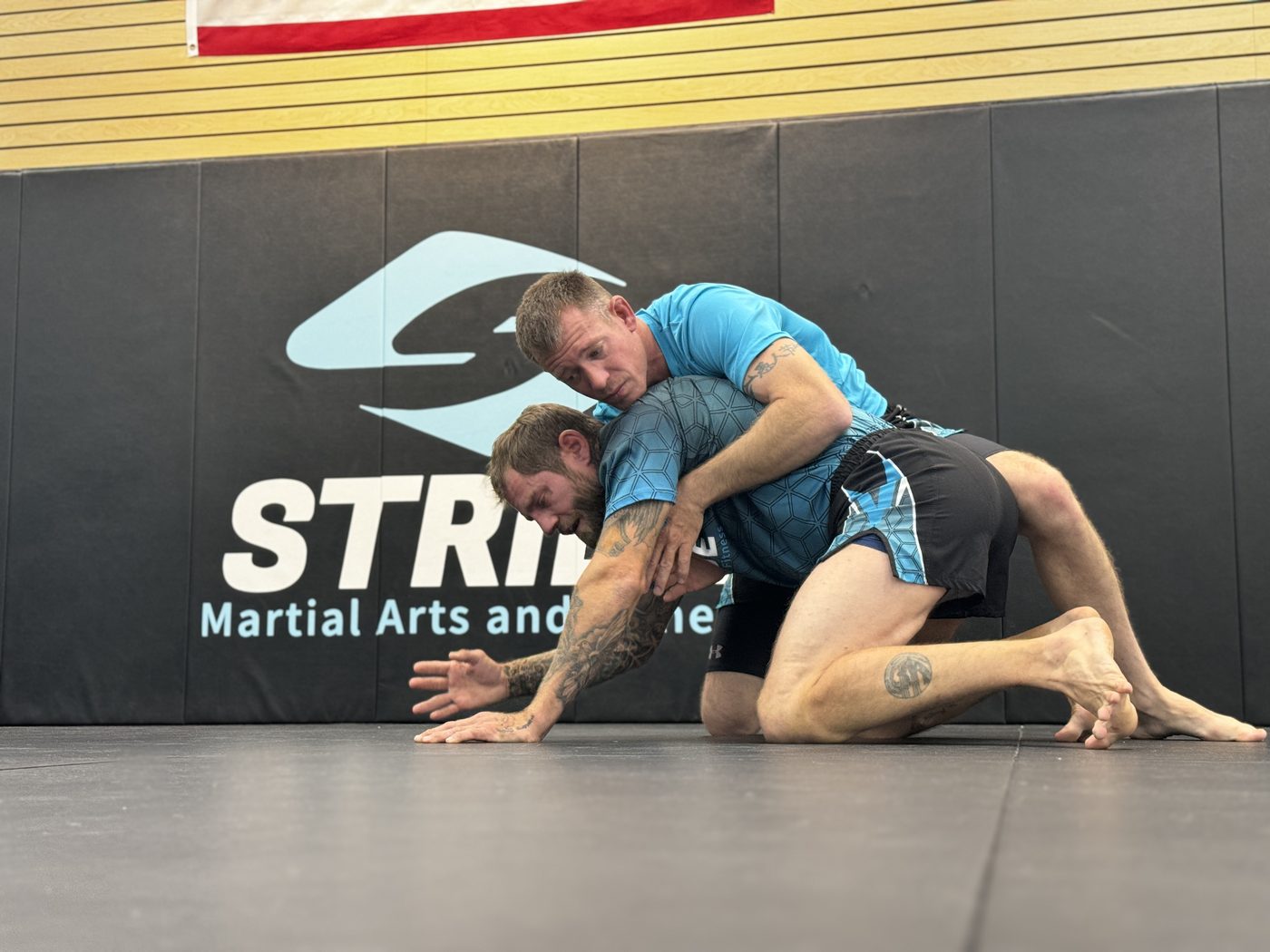
People search for jujutsu classes, jiu-jitsu gyms, and BJJ near Excelsior Springs and get three different answers. The names are related. The training is not identical. If you are choosing a first class for yourself or for a child, the difference is worth two minutes.
Jujutsu is the older Japanese word. It describes the empty-hand grappling methods that grew up in Japan alongside armed arts. Classical jujutsu schools taught throws, joint locks, pins, and strikes as a way to deal with an opponent at close range. Many of those schools still exist as traditional martial arts. A class that says jujutsu may be teaching that older system, with a set curriculum, forms, and a different uniform and rank structure.
Jiu-jitsu is the same idea spelled the way it traveled. When the art left Japan, the word was written in English in more than one way. Jiu-jitsu, jujitsu, and jujutsu all point back to that Japanese root. The spelling on a sign does not tell you what happens in the room. You have to ask what the class actually practices.
Brazilian jiu-jitsu, usually shortened to BJJ, is the version that developed in Brazil in the twentieth century. The Gracie family and other teachers adapted Japanese jujutsu and judo into a system built around grappling on the ground. The emphasis shifted. A match is won by position and by submission, not by striking. You learn to take the fight down, pass the legs, hold a dominant position, and finish with a choke or a joint lock. Sparring, called rolling, is a normal part of training once you are ready for it.
That focus is why BJJ looks different from a traditional jujutsu class and from a striking class. You spend time on your back, on your side, and on top of a partner. The better position usually beats the stronger person, which is why smaller students can do well. Leverage, frames, and timing matter more than muscling through a move.
Gi and No-Gi are two ways to train the same art. In the Gi you wear the heavy woven jacket and pants. Grips on the cloth change the game. No-Gi is a rash guard or t-shirt and shorts, with no jacket to hold. Both are Brazilian jiu-jitsu. At Stride, adult classes include Gi and No-Gi through the week. Ages start at 15.
Kids training is jiu-jitsu only, for ages 6 to 14. The youth classes are grouped by age. Younger students and older students are not thrown into the same hour. The goals are confidence, discipline, and real self-defense skills, taught in a way children can use: posture, balance, and how to stay calm when someone grabs them. Fitness Kickboxing at Stride is a separate adult class. It is not a kids program.
A first Brazilian jiu-jitsu class is simpler than people expect. You arrive a few minutes early, meet a coach, and fill out a short waiver. Wear workout clothes. Class starts with a warm-up, then a technique shown step by step. You drill it with a partner at a calm pace. Live rolling is explained and stays optional while you are new. You can sit out a round. Nobody needs a perfect athletic background to start.
If you searched for jujutsu classes near Excelsior Springs, Kearney, or Liberty, this is the art we teach: Brazilian jiu-jitsu, for kids ages 6 to 14 and for adults 15 and up. The gym is in Excelsior Springs at 2365 Vintage Drive, about 10 minutes from Kearney and about 15 to 20 minutes from Liberty. It is not in Kearney or Liberty.
The room is family-owned and beginner-friendly. Instructors hold black-belt and brown-belt rank in Brazilian jiu-jitsu. Stride is the 2026 The Pitch Best of KC winner for martial arts gyms. Most adults who walk in have never trained. Kids start with the basics and build from there. You can schedule a trial class and see the mat before you decide anything else.
A useful way to choose is to watch one class, not to memorize the spelling. If people are striking, it is not Brazilian jiu-jitsu. If people are practicing forms and standing locks with little sparring, it may be a traditional jujutsu school. If people are gripping, passing the legs, and finishing with chokes and joint locks, you are looking at BJJ, whether the sign says jiu-jitsu or jujutsu. Stride uses the jiu-jitsu spelling because that is the name families search, and the curriculum is Brazilian jiu-jitsu.
Kids classes stay on the ground game and the habits that come with it: balance, listening, and how to stay calm when someone grabs them. Adults can train Gi, No-Gi, or both in the same week. Come see the difference in person. The first class is free. You will know within that hour whether the room matches what you were searching for.
Read more about adult Brazilian jiu-jitsu and kids jiu-jitsu.
Try a free class
Schedule a trial class at 2365 Vintage Drive in Excelsior Springs and see if the room is a good fit.